A First Club Open Day: What to Notice Before You Play
A first tennis club open day is easier to read with a simple visit plan: notice the courts, shared spaces and customs before deciding whether to play.
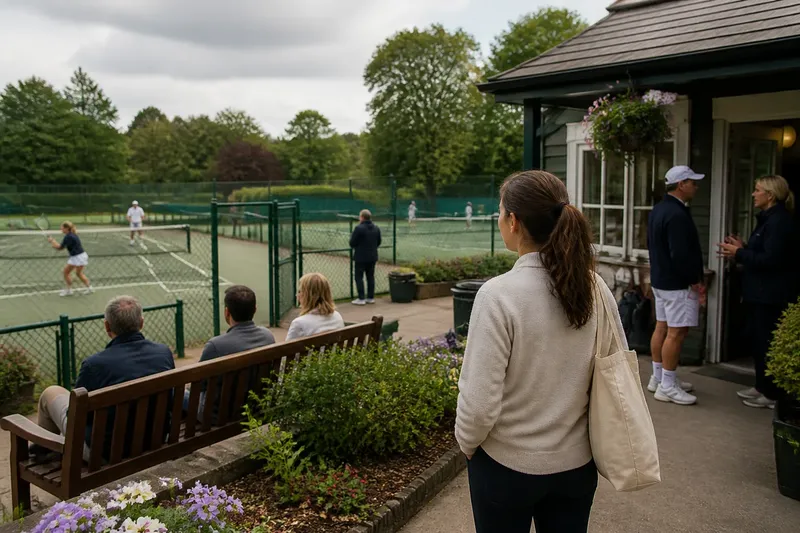
At a first tennis club open day, the useful question is not whether you look like a member, but whether the place feels comfortable to spend time in. You can learn plenty before picking up a racket: watch how people share the courts, where visitors are welcomed and what happens between points. Treat the visit as a morning of looking around, with playing as an option rather than an entrance exam.
Before you go, decide what you want to notice
Choose a simple purpose for the visit. Perhaps you want to understand how court bookings work, see whether the club has a social atmosphere, or find out if there is a suitable session for a beginner. One or two questions are enough; a clipboard of criteria would make an open day feel like a procurement exercise.
Check the club’s open-day information for arrival arrangements, access to the courts and whether visitors may try a short hit. Wear comfortable clothes and shoes suitable for walking around. If you own a racket, bring it only if the invitation suggests play; otherwise, there is no need to arrive equipped for a match that has not been arranged.
Arrive with time to find the entrance and notice how the visit begins. Is there a person greeting visitors, a sign pointing to reception, or a table where you can ask questions? These small details show how the club handles newcomers on an ordinary day, not just in its welcoming announcement.
Start with the courts and their edges
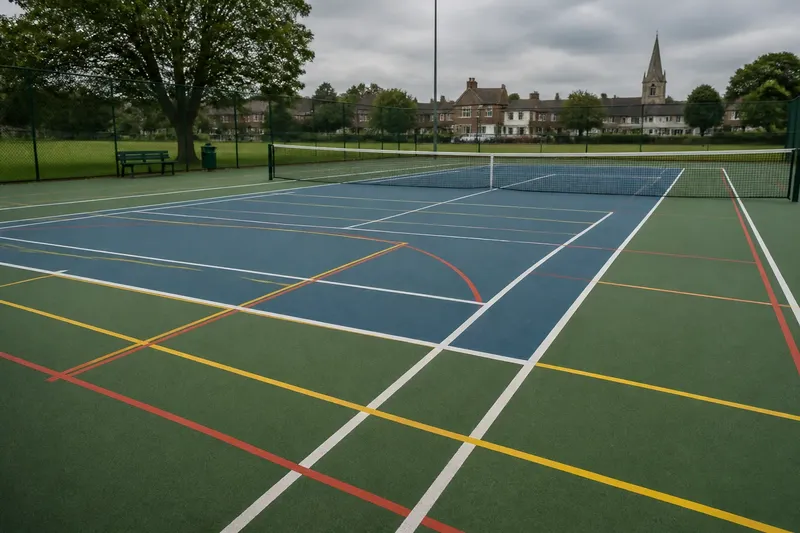
Spend a few minutes watching from a place that does not interrupt play. Notice whether the courts are busy, how players move on and off them, and whether waiting players know where to stand. The point is not to judge anyone’s technique. You are looking at the rhythm around the game: whether it seems organised, relaxed, or difficult to read as a visitor.
Look at the practical details around the playing area. Are gates easy to identify? Can you tell where bags and water bottles belong? Do players have space to wait without standing behind an active court? A court is not only the rectangle inside its lines; the surrounding paths and waiting areas shape how welcome a first visit feels.
Notice how people share access. If a court is in use, observe whether others wait for a clear opening rather than interrupting a point. If the club has different surfaces or courts with different uses, ask which ones are open to visitors and how players find out. You need not infer a rule from a glimpse: a polite question is more reliable than trying to decode a club’s entire booking system from the fence.
Then look at the spaces between games
Walk through the shared areas that visitors are invited to use: the entrance, seating, changing facilities or clubhouse. Notice whether you can tell where to leave outdoor shoes, where to refill a bottle and where to sit while waiting. A club’s social life is often easiest to read in these transitions, where nobody is serving or returning a ball.
Pay attention to how people address one another. Do players acknowledge someone arriving, make room at a bench, or explain where the next activity is taking place? Customs need not be elaborate to matter. A familiar nod can make a room easier to enter; silence is not necessarily unfriendly, but a visitor should be able to ask for basic directions without feeling they have interrupted a private ceremony.
Think of the visit like looking at a kitchen before cooking in it: the useful question is where things are and how people use the space, not whether every utensil matches. You are gathering practical clues, not searching for a hidden standard of club behaviour.
Use the middle of the visit for one conversation
Once you have seen the courts and shared spaces, speak to a host, coach or member. Keep the conversation specific. Ask how a new visitor would arrange a first social hit, whether there are sessions for different experience levels, or whom to contact about membership options. The answer may reveal more about the club’s everyday organisation than a polished welcome board.
Say you arrive alone, have played casually at public courts, and are unsure about joining a group. You could ask the host whether there is a session where newcomers can meet a hitting partner without committing to regular play. The observable result you are looking for is a clear next contact or explanation of how that session works, not a promise that every visit will feel effortless.
Listen for whether the answer leaves room for your circumstances. A helpful response can be direct without pressuring you to sign up on the spot. If you are offered a leaflet or contact details, take them and read them later; the open day need not end with a decision.
Finish by checking the details that affect your choice
Before leaving, ask any practical questions that remain. These may include how visitors book a court, whether equipment is available to borrow, how social play is arranged, and what facilities are open to non-members. If an answer depends on the club’s current rules or terms, check its written information or ask the person responsible rather than relying on a passing comment.
- Can a newcomer arrange a visit or trial session without joining immediately?
- Which courts and facilities may visitors use?
- How are social sessions organised, and who helps place a new player?
- Is there a way to borrow a racket or other basic equipment for an introductory hit?
- What should you bring, and where should you meet on arrival?
Make a short note after you leave: what felt easy to understand, what you would like clarified, and whether you would enjoy spending time there between games. That last point matters. A club is not only a place to book a court; it is also a set of shared habits and spaces you may encounter before and after playing.
Questions worth asking at a first club open day?
Do I have to play during an open day?
No. Unless the invitation says otherwise, you can attend to look around and talk to people. If you are interested in trying a racket, ask whether a short hit is available and what to bring.
What should I wear to visit a tennis club?
Choose comfortable clothes and shoes that suit walking around the grounds. For a court session, check the club’s guidance first, since footwear and clothing expectations can vary.
How can I tell whether a club suits a beginner?
Ask how newcomers find playing partners, what introductory sessions exist and who can explain the booking routine. Then notice whether the answers are clear and whether the people you meet make it easy to ask a follow-up.
Should I decide about membership on the day?
Only if you already have enough information and feel ready. Taking away the details and considering them later is a perfectly normal outcome of a first tennis club open day.
Leave with one practical next step, even if it is simply the name of a person to contact. That gives you a way back into the conversation without turning a pleasant look around into a commitment. The best sign may be modest: you can picture where you would arrive, where you would wait, and how you would ask what happens next.